Electric Motor Design and Simulation
Comprehensive Electric Motor Design and Simulation Solutions
Comprehensive Electric Motor Design and Simulation Solutions
1. Stress and Deformation
Parts of the motor can bend or crack because of high mechanical forces.
2. Vibration and Noise
Poor design leads to unwanted vibrations and loud noises during operation.
3. Overheating
Heat builds up inside the motor and is hard to manage, causing damage or shorter life.
4. Uneven Temperature Distribution
Some parts get hotter than others, leading to weak spots and failures.
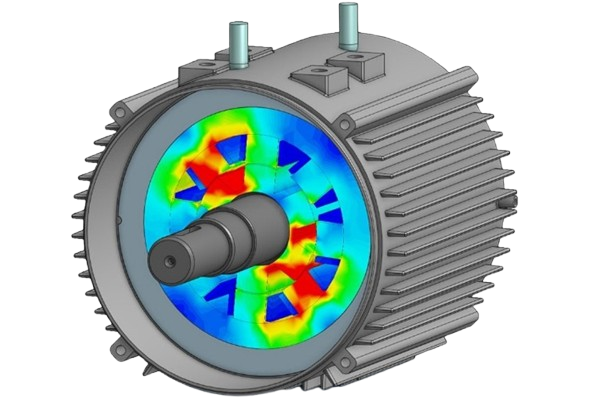
By combining these multiphysics insights, engineers can optimize design variables such as slot-pole configuration, winding patterns, magnet shapes, and cooling mechanisms. This approach reduces reliance on prototyping, shortens development cycles, and ensures motors meet application requirements.
EV traction motors, hybrid drives
Actuation motors, cooling fans
Motors in robotics, conveyor systems
Generators serve as the backbone of modern power systems, ensuring the continuous supply of electricity in industries, renewable energy plants, and backup systems. Unlike motors, which convert electrical energy into motion, generators perform the reverse — transforming mechanical energy into electrical energy with maximum efficiency and stability.
A strong generator design begins with the magnetic circuit, where rotor–stator interactions define voltage generation and overall efficiency. Careful attention to winding layouts, pole configurations, and material properties helps minimize losses and harmonics. Just as important is thermal management — preventing overheating in coils and magnets to safeguard long-term performance.
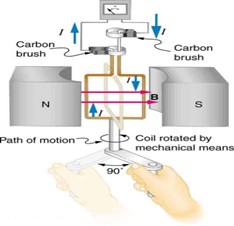
Beyond the electromagnetic domain, generators must withstand mechanical stresses, centrifugal forces, and vibration at varying speeds. This makes rotor dynamics, shaft integrity, and bearing design critical to system reliability. At the system level, advanced controls and power electronics ensure stable integration with grids, renewable sources, or standalone power systems.
Today, generator development is increasingly linked to renewable energy and sustainability goals. Compact permanent magnet generators power modern wind turbines, hydro systems, and distributed energy solutions, while large synchronous machines continue to anchor traditional power plants.
Checks magnetic flux and voltage output.
Monitors heat and prevents overheating.
Ensures rotor and shaft are strong and stable.
Combines all effects for accurate results.
Finds and reduces energy losses.